
Reading the Job Market Before You Apply
Most job seekers choose roles based on instinct, a job title they like, or a company they have heard of. Those signals matter, but they do not tell you how many roles are open, how quickly new ones appear, what employers pay, or which skills get people hired.
This article explains what to look at in live job market data, how to use those signals to choose roles, and how Dabanti Market Intelligence helps you do it.
Why market data changes how you search
A job search has a timing problem. If you apply to a field where few roles are open, your effort is spread thin. If you target a skill that employers are hiring for right now, your application has a better chance of standing out. Market data helps you see where those opportunities are before you invest hours in applications.
It also helps you set realistic expectations. Knowing typical pay ranges for your roles lets you judge offers with more confidence and avoid applying where the numbers do not match your needs.
What to look at
When you review the job market for your roles, focus on five questions:
- How many jobs are open? A steady number of listings suggests an active market. A very small number means you may need a wider search or a related title.
- How fast do new jobs appear? Fresh listings are often the best time to apply, while the role is still being screened.
- What do employers actually pay? Compare ranges across companies and locations, not only the figures in one posting.
- Which skills do recruiters look for? Skills that appear again and again across postings are the ones to highlight in your CV and cover letter.
- Which companies are hiring? A list of active employers can help you research, prioritize and find roles you did not know existed.
Use the signals to choose roles
Once you have the data, narrow your list in three steps:
- Keep roles that match your experience and the skills employers ask for. If your background is close but not identical, use the job post language to show the overlap.
- Check that the pay range fits your expectations. This saves time on roles that would not work for you.
- Prioritize companies that are hiring for your skills now. Apply first where the demand is clearest, then widen the search.
Revisit the data every week or two. Markets move, and the roles and skills that stand out can change.
How Market Intelligence helps
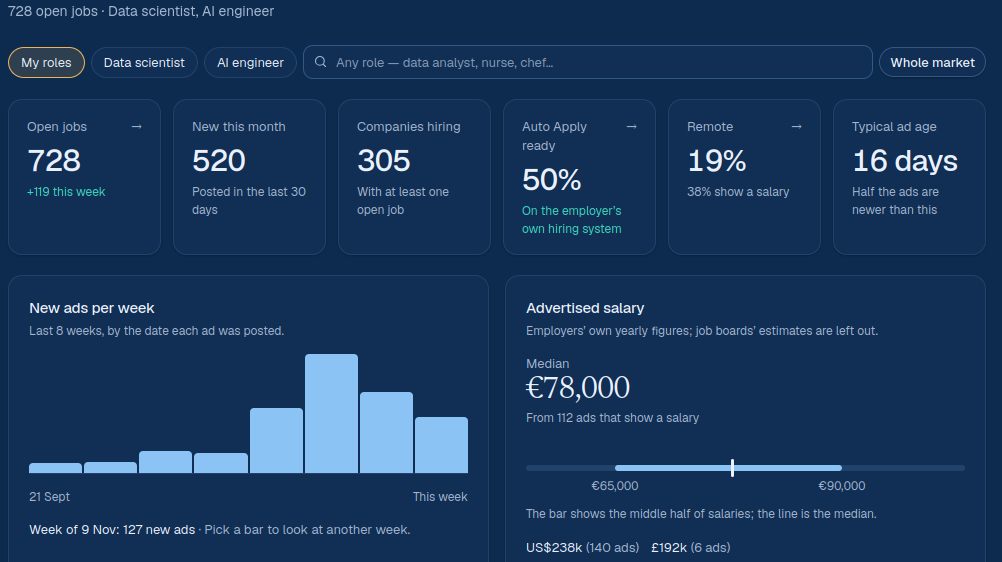
Dabanti Market Intelligence shows the live job market for your roles. It brings together open jobs, how fast new ones appear, pay signals, the skills you need to hear back from recruiters, and the companies hiring. Instead of collecting this information across many job boards, you can review it in one place and use it to decide where to apply next.
Market Intelligence informs your choices. It does not replace your judgement about which roles you want, and it does not guarantee a reply from any employer.
Turn the data into a plan
Before your next application session, write down three things: the roles with the strongest demand, the skills to emphasize, and the companies to research first. Then tailor your applications to match. A plan built on evidence is easier to follow, and easier to adjust when the market changes.